
Jade Knowledge
What Is Jadeite Jade? A Simple Guide for First-Time Jade Lovers
Dec
What Is Jadeite Jade? A Simple Guide for First-Time Jade Lovers
If you’re new to jade, the terms jade, jadeite and nephrite can be confusing. This short guide will help you understand what jadeite jade actually is and why it’s so loved around the world.
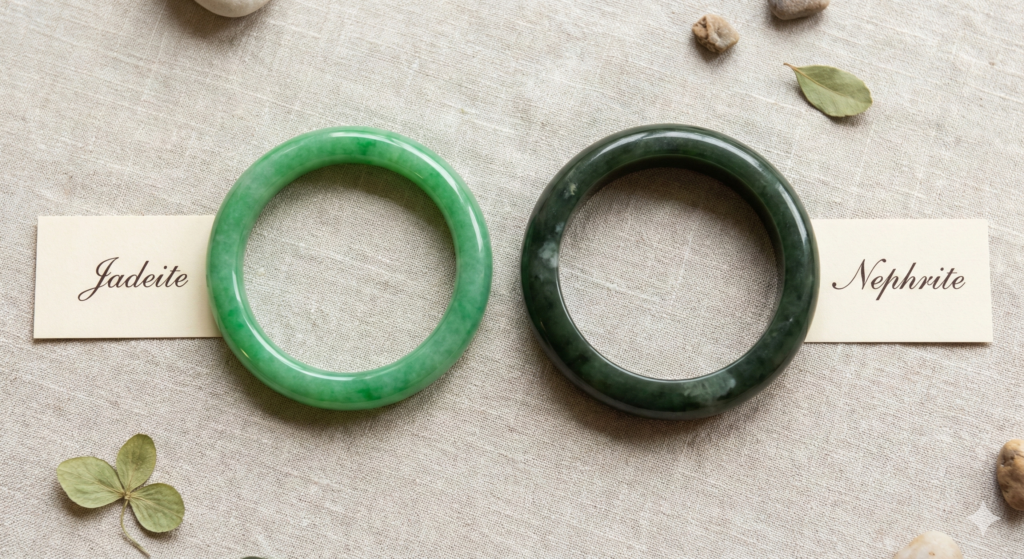
Jade vs Jadeite vs Nephrite
When people say “jade”, they usually mean one of two different minerals:
-
Jadeite
-
Nephrite
Both are real jade, but they are not the same stone.
-
Jadeite jade is harder and denser, and it comes in a wider range of colours: soft green, vivid green, icy white, lavender, yellow, even black. It can look fresh, bright and slightly translucent.
-
Nephrite jade is a little softer, more opaque and often appears in darker or creamier tones like deep green, grey-green or off-white.
You can think of it simply as:
All jadeite is jade, but not all jade is jadeite.
For high-end jewellery and collectible bangles, people usually mean jadeite jade.
Where Does Jadeite Jade Come From?
Gem-quality jadeite jade is most famously found in Myanmar (Burma). When you see descriptions like “Burmese jadeite” or “Burmese jade bangle”, it usually refers to jadeite from this region.
Jadeite can also be found in smaller quantities in countries like Guatemala, Japan and Russia, but Burmese jadeite is the most well-known in the jewellery world.
Why Is Burmese Jadeite So Special?
Burmese jadeite is highly valued because:
-
It produces some of the most vivid, glowing greens in the world
-
The best pieces have strong translucency and a rich, even colour
-
It has been treasured in Asian cultures for centuries as a symbol of status, luck and protection
You don’t need a museum piece to start your jade journey, but it helps to know that when people talk about “top quality jade”, they’re usually referring to fine Burmese jadeite jade.